REF: http://www.geog.nau.edu/courses/alew/gsp220/text/chapters/ch2.html
Saturday, May 9, 2015
Friday, March 20, 2015
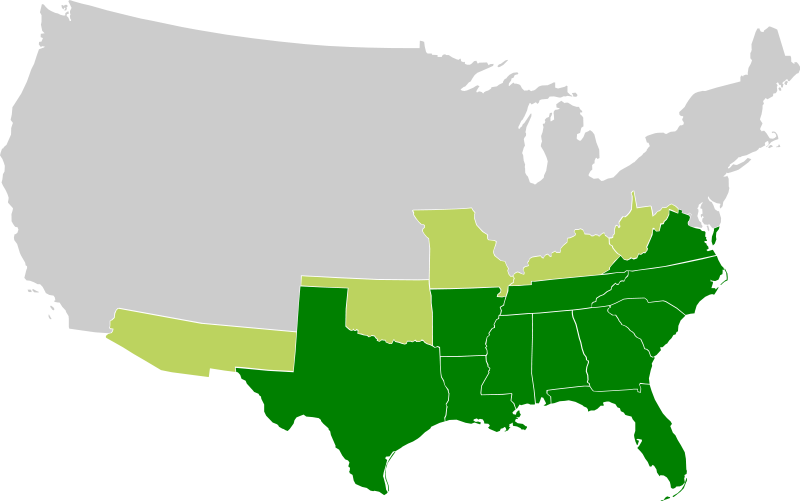
Chapter 9 - The Inland South
New York is not part of the 'Inland South' since this region includes parts of Virginia, West Virginia, the Carolinas, Georgia,
Alabama, Tennessee, Kentucky, Mississippi, Arkansas, southern Missouri, northern
Louisiana, eastern Oklahoma, and East Texas.
Chapter 8 - The Great Lakes and Corn Belt
The millions of persons who settled the Great Lakes and Corn Belt region came from
many different origins. Natives of the Appalachians, such as Kentucky-born Abraham Lincoln,
moved north and west across the Ohio River. These “Butternut” settlers were soon outnumbered
by natives of New England, New York, and Pennsylvania who crossed the Alleghanies in search
of cheap, fertile farmland. They were joined by immigrants from England, Scotland, Ireland,
Wales, Germany, the Netherlands, and Scandinavia. Many Canadians who a generation or two
earlier had moved to Upper Canada returned to the United States, and were especially prevalent
in Michigan.(Hardwick, 153)
Most of the residents of the Great Lakes and Corn Belt in 1910 were of European ancestry. However, diversity in the region soon increased as African-Americans began to move to the region in large numbers after World War I. The movement of African-Americans from the South became a critical part of a new migration stream that dramatically changed the demographics and cultures of cities throughout the region. Between 1916 and 1920, some 500,000 African-Americans left the rural South for the industrial centers of Chicago, New York, Detroit, Cleveland, Philadelphia, St. Louis, and Kansas City in what was known as the “Great Migration.” Thousands more moved northward between the 1920s and the 1950s. These migrants were driven by both push factors and pull factors. Push factors are issues encouraging people to migrate away from their areas of origin. For Southern African Americans, these push factors included institutionalized racism and segregation, lynchings, beatings, crop failures, and limited educational and economic opportunities. Pull factors are issues encouraging migrants to select particular destinations. Pull factors in the industrial cities of the Great Lakes and Corn Belt included jobs at much higher wages than were prevalent in the South, along with a call to freedom and a much sought after opportunity for equality. (Hardwick, 154)
REFERENCE: The Geography of North America, Hardwick
Most of the residents of the Great Lakes and Corn Belt in 1910 were of European ancestry. However, diversity in the region soon increased as African-Americans began to move to the region in large numbers after World War I. The movement of African-Americans from the South became a critical part of a new migration stream that dramatically changed the demographics and cultures of cities throughout the region. Between 1916 and 1920, some 500,000 African-Americans left the rural South for the industrial centers of Chicago, New York, Detroit, Cleveland, Philadelphia, St. Louis, and Kansas City in what was known as the “Great Migration.” Thousands more moved northward between the 1920s and the 1950s. These migrants were driven by both push factors and pull factors. Push factors are issues encouraging people to migrate away from their areas of origin. For Southern African Americans, these push factors included institutionalized racism and segregation, lynchings, beatings, crop failures, and limited educational and economic opportunities. Pull factors are issues encouraging migrants to select particular destinations. Pull factors in the industrial cities of the Great Lakes and Corn Belt included jobs at much higher wages than were prevalent in the South, along with a call to freedom and a much sought after opportunity for equality. (Hardwick, 154)
REFERENCE: The Geography of North America, Hardwick
Chapter 7 - Megalopolis
New York city is part of the Northeast Megalopolis which is the most heavily urbanized region of the United States.
There is also a lot of ethnic diversity in the Megalopolis region. The demographics of New York City are evidence of a large and ethnically diverse metropolis. It is the largest city in the United States with a population defined by a long history of international immigration. New York City is home to more than 8 million people, accounting for about 40% of the population of New York State and a similar percentage of the New York metropolitan area, home to about 22 million. Over the last decade the city has been growing faster than the region. The New York region continues to be the leading metropolitan gateway for legal immigrants admitted into the United States.
REFERENCE: http://en.wikipedia.org/wiki/Northeast_megalopolis
Chapter 5 - The Atlantic Periphery
As I mentioned in Chapter 1 post, New York is part of the Atlantic Periphery (east), part also of the Megalopolis (major cities), and part of the Great Lakes/Corn Belt (west).
Lake Placid, a famous place for New Yorkers as a recreational spot is located in the Essex county. It hosted two Winter Olympics event in the past, 1932 and 1980.
Lake Placid is well known among winter-sports enthusiasts for its skiing, both Alpine and Nordic. Whiteface Mountain (4,867 ft or 1,483 m), in nearby Wilmington about 13 miles (21 km) from Lake Placid, offers skiing, hiking, gondola rides, and mountain biking, and is the only one of the High Peaks that can be reached via an auto road. Whiteface Mountain has a vertical elevation of 3,430 feet (1045.464m), the highest vertical elevation of mountains in Eastern North America. The area has one of only sixteen bobsled runs in the western hemisphere, and is one of the few places in the contiguous United States which offers dogsled and sleigh rides
REFERENCE: http://en.wikipedia.org/wiki/Lake_Placid,_New_York
Chapter 4 - The North American Political Economy
The economy of New York City is the biggest regional economy in the United States and the second largest city economy in the world. Anchored by Wall Street, in Lower Manhattan, New York City is one of the world's two premier financial centers, alongside London and is home to the New York Stock Exchange and NASDAQ, the world's largest stock exchanges by market capitalization and trading activity. New York is distinctive for its high concentrations of advanced service sector firms in fields such as law, accountancy, banking and management consultancy.
The financial, insurance, health care, and real estate industries form the basis of New York's economy. The city is also the most important center for mass media, journalism and publishing in the United States, and is the preeminent arts center in the country. Creative industries such as new media, advertising, fashion, design and architecture account for a growing share of employment, with New York City possessing a strong competitive advantage in these industries. Manufacturing, although declining, remains consequential.
The New York Stock Exchange is by far the largest stock exchange in the world by market capitalization of listed companies. The NASDAQ electronic exchange has the most companies listed and is second largest in the world by market capitalization of listed companies.
The New York metropolitan area had an estimated gross metropolitan product of $1.28 trillion in 2010,. The city's economy accounts for the majority of the economic activity in the states of New York and New Jersey
REFERENCE: http://en.wikipedia.org/wiki/Economy_of_New_York_City
The financial, insurance, health care, and real estate industries form the basis of New York's economy. The city is also the most important center for mass media, journalism and publishing in the United States, and is the preeminent arts center in the country. Creative industries such as new media, advertising, fashion, design and architecture account for a growing share of employment, with New York City possessing a strong competitive advantage in these industries. Manufacturing, although declining, remains consequential.
The New York Stock Exchange is by far the largest stock exchange in the world by market capitalization of listed companies. The NASDAQ electronic exchange has the most companies listed and is second largest in the world by market capitalization of listed companies.
The New York metropolitan area had an estimated gross metropolitan product of $1.28 trillion in 2010,. The city's economy accounts for the majority of the economic activity in the states of New York and New Jersey
REFERENCE: http://en.wikipedia.org/wiki/Economy_of_New_York_City
Subscribe to:
Posts (Atom)